Costa Rica's Páramo: The Andean Ecosystem That Survives in Talamanca
Páramo is an Andean ecosystem, and in Central America it exists only on the summits of the Talamanca range, in Costa Rica and western Panama. You reach it from the hotel by vehicle, with a short walk at the end, on a roughly 5-hour tour through Los Quetzales National Park — 5,000 hectares protecting 14 distinct ecosystems.
- Duration
- Approximately 5 hours
- Transport
- Safari vehicle from reception
- Walking
- Short, at the lookout
- Difficulty
- Easy — suitable if you are not doing the long hike
- Park
- Los Quetzales National Park, 5,000 ha, designated 2005
- Protected ecosystems
- 14 · three forest zones
- Guide
- Included
- Groups
- Small and large
- Price
- Per booking, 1 to 4 people · ask us
- Departure
- 8:30 a.m. · 5 hours
Tour details
What páramo is, and why it is here
Above 3,000 metres, forest cannot grow. Constant wind, intense solar radiation, and nightly frost select for a different kind of vegetation: dwarf shrubs, tight cushions of plants, growth that never exceeds a metre and endures conditions no tree tolerates.
That ecosystem is called páramo and it is characteristic of the northern Andes. In Central America it does not exist except on the summits of Talamanca. Walking here means walking on a piece of Andean landscape left stranded thousands of kilometres from the Andes, with species that have evolved on their own ever since.
The continental divide
The route reaches the line separating the Caribbean and Pacific watersheds. In biogeographic terms it is also one of the places where ecosystems of North and South American origin meet: oaks related to those of the northern hemisphere growing a few kilometres from vegetation of Andean lineage.
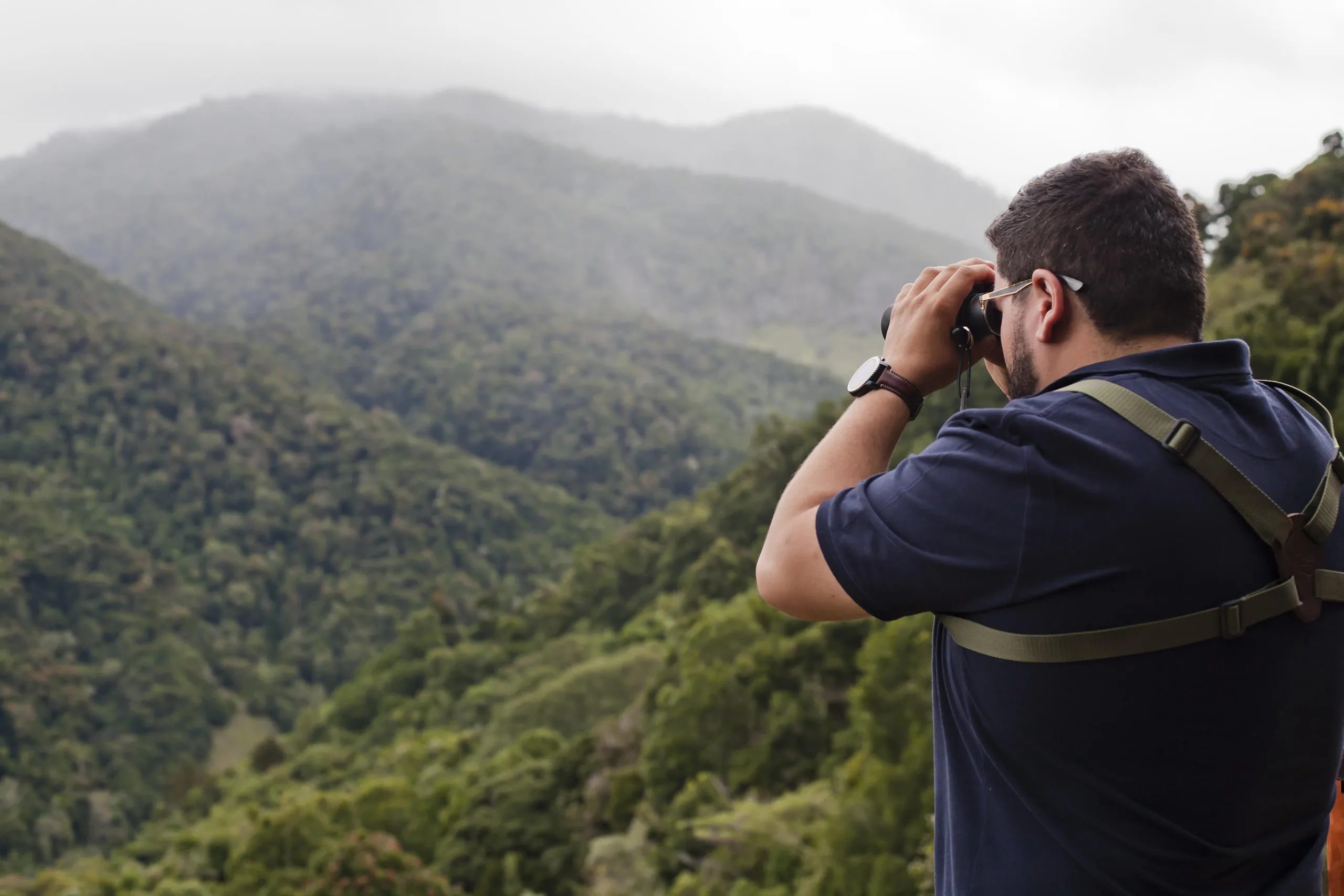
From the lookout, on a clear day, you see the Talamanca range and the volcanoes of the Central Volcanic range to your right; the Central Pacific ahead; the South Pacific to your left, running down towards the General Valley and the Osa Peninsula; and Cerro Chirripó, the country's highest point, on the horizon.
Los Quetzales National Park
Designated a national park in 2005, it protects 5,000 hectares across three forest zones and 14 distinct ecosystems. Its purpose goes beyond scenery: rivers that supply water to much of the country rise here, and keeping these mountains forested is what sustains that flow.
Along the way you may spot highland endemic birds. The guide explains the natural history of the area as you go — which is the difference between looking at shrubs and understanding why those shrubs are there.
Who this tour is for
This is the accessible route to the páramo. You drive up and the walk is short, so it requires no particular fitness. If what you want is to walk, the trails in the hotel's reserve run from 400 metres to 6.2 kilometres, all without leaving the property.
What to bring
Serious warm clothing — the páramo is cold and the wind does not stop — a waterproof windbreaker, high-factor sun protection, and sunglasses. At that elevation the radiation is intense even under cloud, and underestimating it is the most common mistake.
Frequently asked questions
Do I need to be fit?
Not for this tour. You travel by vehicle and the final walk is short. If you want the physical challenge, the Los Robles trail in the reserve is 6.2 kilometres of uneven ground, two to three hours.
How is this different from the hiking tour?
This tour leaves the hotel by vehicle for the páramo, above 3,000 metres, and takes about 5 hours. The reserve trails are walked from the hotel, inside the oak cloud forest. They are two different landscapes, not two versions of the same one.
Can quetzals be seen in the páramo?
No. The quetzal lives in the cloud forest lower down, not in the páramo. The park is named for the protected area as a whole.
Interested in this experience?
Check availability