Birdwatching in San Gerardo de Dota: over 250 species in the cloud forest
More than 250 bird species have been recorded in the Savegre reserve, including Talamanca mountain endemics found nowhere else on earth. San Gerardo de Dota is the only Costa Rican destination featured in Fifty Places to Go Birding Before You Die, and our guided tour leaves just after dawn, when activity is at its peak.
- Duration
- 4 hours
- Departure
- Just after dawn
- Difficulty
- Easy to moderate — short walks
- Species recorded
- More than 250
- Elevation
- 2,200 m (7,200 ft)
- Best season
- Year-round · quetzal January to June
- Specialist guide
- Included
- Level
- Beginner to expert birder
- Price
- Per booking, 1 to 4 people · ask us
Tour details
Why this valley
The Talamanca range works as a biological island. Its isolation at high elevation produced a set of species that evolved separately and that today are found nowhere outside the mountains of Costa Rica and western Panama. For a birder who has spent years adding species, that makes this valley a required stop: there are birds you can only tick here.
The structure of the habitat adds to it. The hotel's private reserve protects more than 500 hectares of mature oak forest, within the same highland corridor of the Talamanca range, and combines closed forest, forest edge, gardens, and the bank of the Savegre river within a short distance. That variety of habitats within walking range is what makes the list grow quickly.
Species birders come for
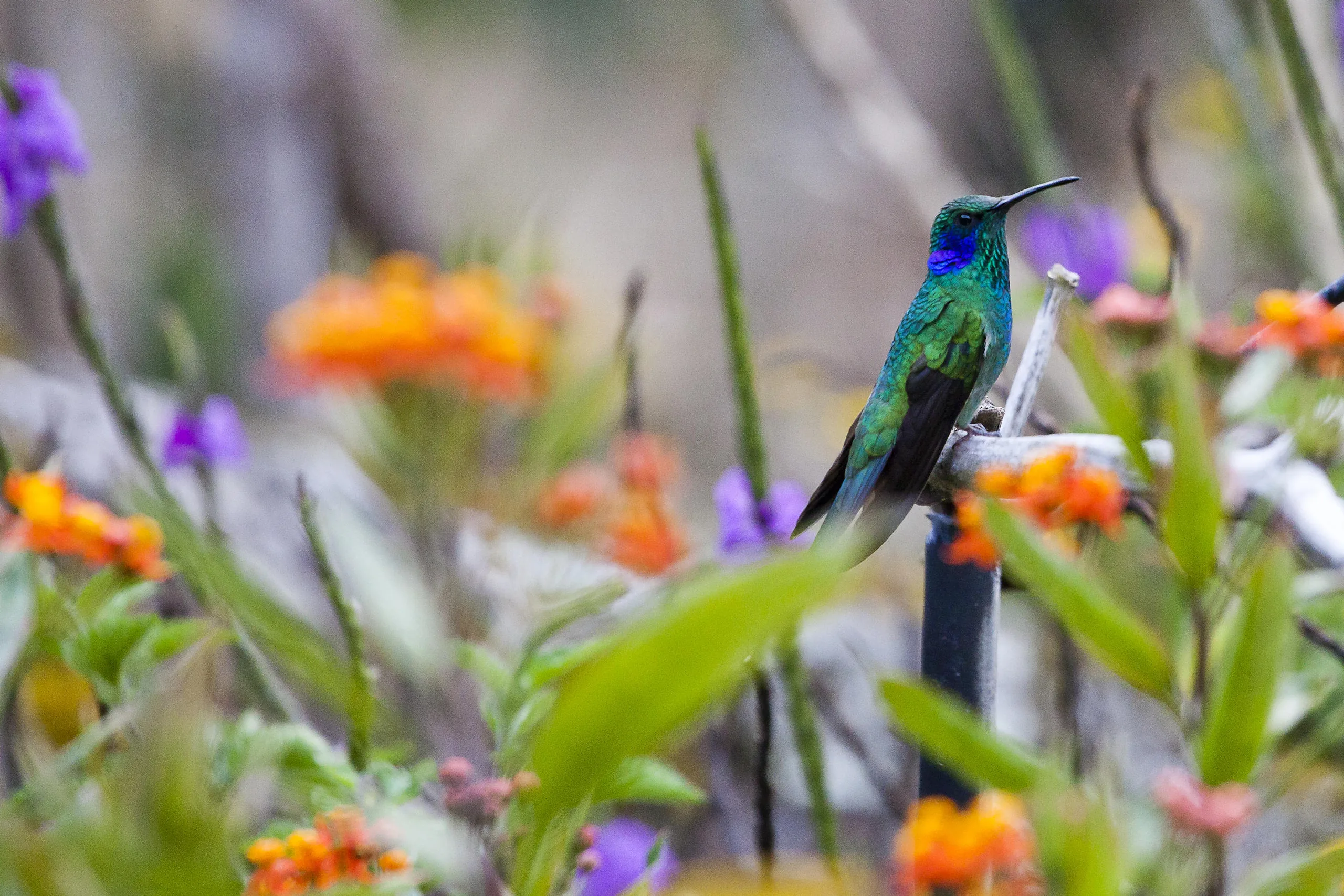
Beyond the resplendent quetzal, the area's list includes highland hummingbirds, warblers, and Talamanca understorey specialists.
More than 250 bird species have been recorded in the Savegre reserve. That figure reflects vetted records: public databases list higher counts, but they include doubtful identifications that we prefer not to count. These fifteen are the ones our guides name first.
| English | Spanish | Scientific |
|---|---|---|
| Resplendent Quetzal | Quetzal Resplandeciente | Pharomachrus mocinno |
| Costa Rican Pygmy-Owl | Mochuelo Costarricense | Glaucidium costaricanum |
| White-throated Mountain-gem | Colibrí Montañés Gorgiblanco | Lampornis castaneoventris |
| Volcano Hummingbird | Chispita Volcanera | Selasphorus flammula |
| Scintillant Hummingbird | Chispita Gorginaranja | Selasphorus scintilla |
| Ruddy Treerunner | Subepalo Rojizo | Margarornis rubiginosus |
| Silvery-throated Jay | Urraca Gorjiplateada | Cyanolyca argentigula |
| Long-tailed Silky-flycatcher | Capulinero Colilargo | Ptiliogonys caudatus |
| Flame-throated Warbler | Reinita Garganta de Fuego | Oreothlypis gutturalis |
| Collared Redstart | Candelita Collareja | Myioborus torquatus |
| Wrenthrush | Zeledonia | Zeledonia coronata |
| Spangle-cheeked Tanager | Tangara Vientricastaña | Tangara dowii |
| Slaty Flowerpiercer | Pinchaflor Plomizo | Diglossa plumbea |
| Sooty-capped Chlorospingus | Clorospingo Cejiblanco | Chlorospingus pileatus |
| Golden-browed Chlorophonia | Clorofonina Cejidorada | Chlorophonia callophrys |
Fourteen of these fifteen species are endemic to Costa Rica and western Panama: they exist nowhere else on earth. The exception is the resplendent quetzal, which ranges from southern Mexico to Panama.
What the tour is like
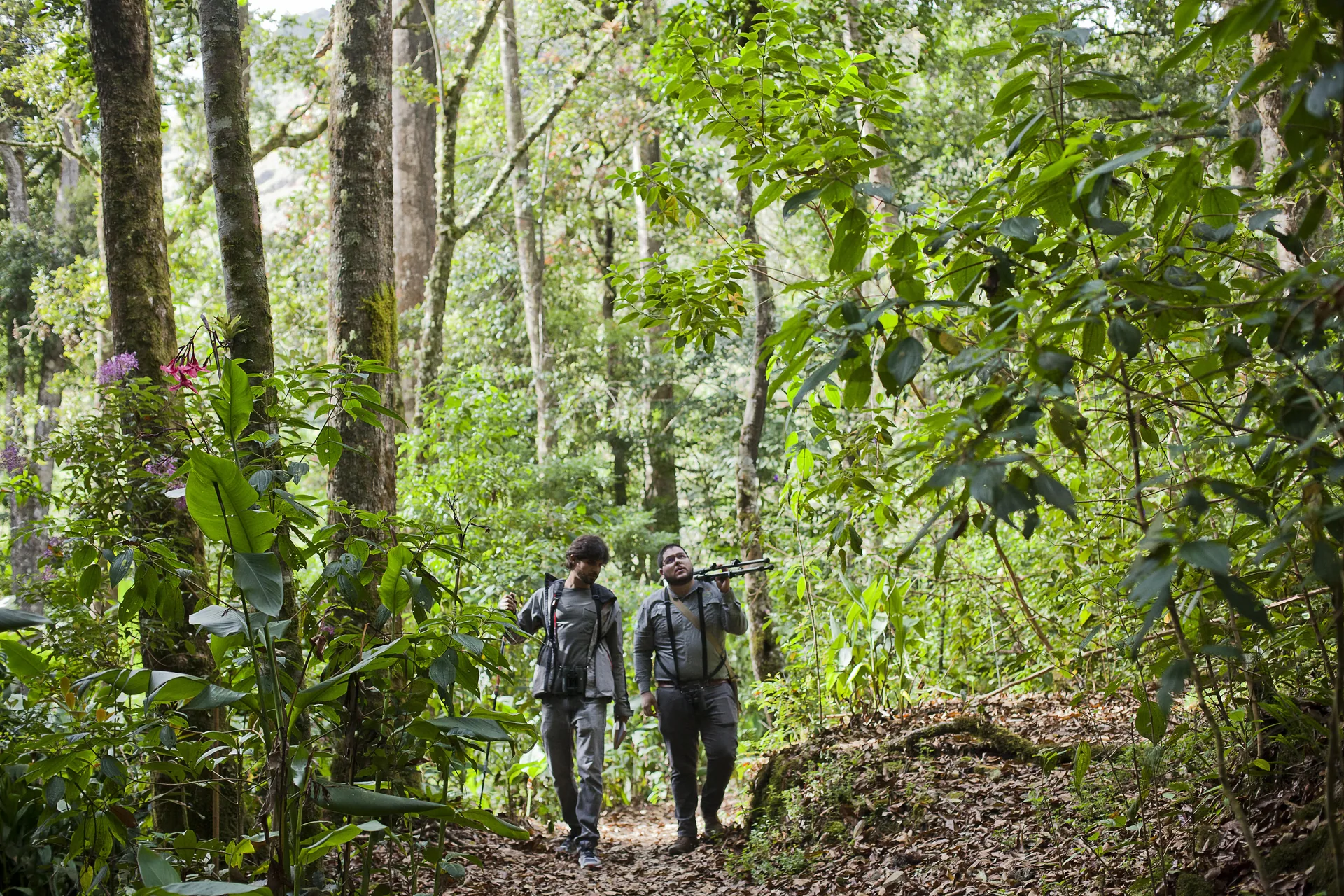
It begins just after dawn, when most species are active and when the difficult ones can be found. It consists of several short walks around the hotel and through the private reserve, without significant physical demand, led by a specialist guide who finds, identifies, and helps you get the bird in view.
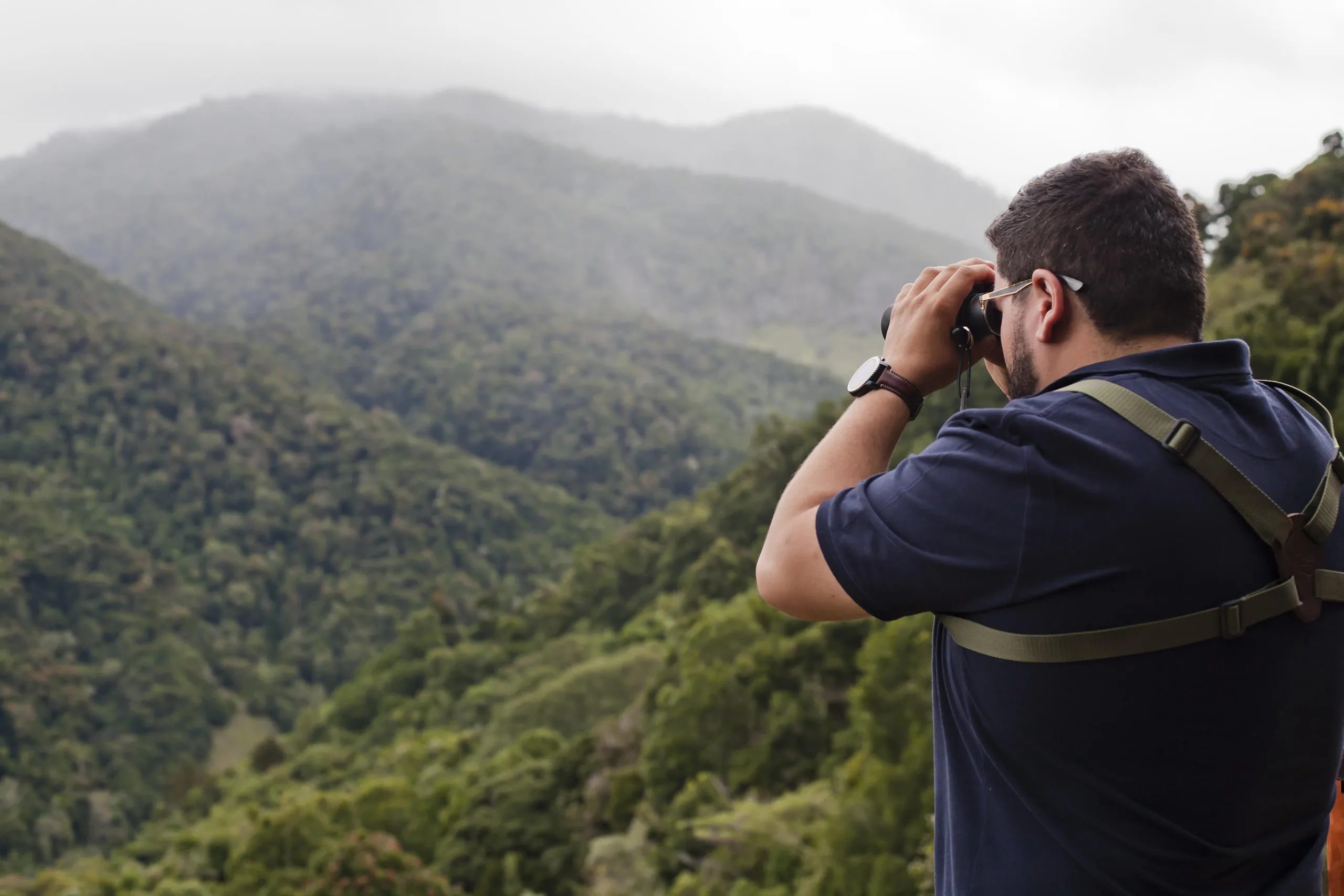
It works equally well for someone who has never used binoculars and for someone arriving with a target list. The guide sets the pace accordingly.
When to come
Birding is good all year. The dry season, December to April, brings clearer mornings. If the quetzal is your main target, the window is January to June, peaking in March and April.
One practical recommendation: two mornings deliver far more than one. The cloud forest changes from one day to the next, and the second outing usually completes what the first left unfinished.
What to bring
Your own binoculars if you have a pair you trust, warm layers, a waterproof jacket, closed shoes with good grip, and muted colours. If you photograph, bring a telephoto lens: cloud forest light is poor and birds rarely cooperate at close range.
Frequently asked questions
Do I need to bring my own binoculars?
The tour does not include them. If you have a pair you are comfortable with, bring it; if not, the hotel rents binoculars at reception.
Is this suitable for beginners?
Yes. The guide finds and identifies the birds; no prior experience is needed. It is a comfortable way to start, with striking species and short walks.
How many species can I expect on one outing?
Write to ventas@savegre.com or call us at (506) 2740-1028 or (506) 2740-1029 and we will confirm based on your dates.
Interested in this experience?
Check availability